This course aims to provide current understanding about extracellular vesicles (EVs) and their role in health and diseases. The EVs are known to be involved in cell to cell communication. Apart from maintaining normal cell physiology, EVs deliver messages that can drive or influence the progression of a disease. This course discusses recent advances made in the field to give an introduction on their function in health as well as in disease.This course includes four modules. Module 1 is an introduction to the course, and provides an overview of the previous MOOC on EVs “Basics of Extracellular Vesicles”. Module 2 focuses on the role of EVs in physiological conditions and gives various examples on their role in metabolism, inflammation, immunity and pregnancy and coagulation. This module also briefly covers the topic of microorganism-derived EVs such as vesicles from bacteria and discusses EVs from apoptotic and senescent cells. In Module 3, we focus on the role of EVs in cancer: how EVs can mediate communication between the tumour and its microenvironment, the functional role of immune cell-derived EVs in development of cancer, as well as the role of EVs in cancer cell proliferation, survival, metastasis and drug resistance. In Module 4, the role of EVs in diseases of the cardiovascular, haematopoietic, nervous, respiratory and urinary systems, and infectious diseases will be presented.This course is recommended for intermediate learners or anyone who is interested in the field of extracellular vesicles and their role in a particular disease including scientists, clinicians, or cell and molecular biologists who look to broaden their understanding of the field.
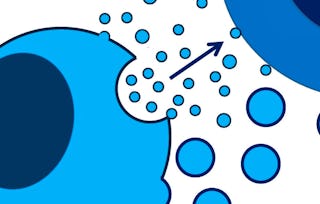
This course aims to provide current understanding about extracellular vesicles (EVs) and their role in health and diseases. The EVs are known to be involved in cell to cell communication. Apart from maintaining normal cell physiology, EVs deliver messages that can drive or influence the progression of a disease. This course discusses recent advances made in the field to give an introduction on their function in health as well as in disease.
This course includes four modules. Module 1 is an introduction to the course, and provides an overview of the previous MOOC on EVs “Basics of Extracellular Vesicles”. Module 2 focuses on the role of EVs in physiological conditions and gives various examples on their role in metabolism, inflammation, immunity and pregnancy and coagulation. This module also briefly covers the topic of microorganism-derived EVs such as vesicles from bacteria and discusses EVs from apoptotic and senescent cells. In Module 3, we focus on the role of EVs in cancer: how EVs can mediate communication between the tumour and its microenvironment, the functional role of immune cell-derived EVs in development of cancer, as well as the role of EVs in cancer cell proliferation, survival, metastasis and drug resistance. In Module 4, the role of EVs in diseases of the cardiovascular, haematopoietic, nervous, respiratory and urinary systems, and infectious diseases will be presented.
This course is recommended for intermediate learners or anyone who is interested in the field of extracellular vesicles and their role in a particular disease including scientists, clinicians, or cell and molecular biologists who look to broaden their understanding of the field.
What's included
2 videos1 reading
Show info about module content
2 videos•Total 39 minutes
Lecture 1.1: Introduction to MOOC II•16 minutes
Lecture 1.2: Overview of MOOC I•23 minutes
1 reading•Total 1 minute
Start Here•1 minute
Physiological Function of EVs
Module 2•3 hours to complete
Module details
In this module, we will discuss the role of extracellular vesicles in maintaining cellular homeostasis, why they are important for this process. How microorganism such as in gram positive and negative bacteria can secrete EVs, will be discussed. Altered EV secretion as a response to inflammation, stress and apoptosis or senescence will be highlighted. Furthermore, some examples will be provided on how EV cargo can influence cellular metabolism and the function of EVs in maintaining physiology of cells in pregnancy and coagulation.
What's included
7 videos1 assignment
Show info about module content
7 videos•Total 174 minutes
Lecture 2.1— Bacterial Extracellular Vesicles (crosstalk with the microbiome)•27 minutes
Lecture 2.2 — Coagulation•26 minutes
Lecture 2.3 — Immunity•18 minutes
Lecture 2.4 — Metabolism•20 minutes
Lecture 2.5 — Pregnancy•35 minutes
Lecture 2.6 — Inflammation and Stress Responses•27 minutes
This module will highlight the role of EVs in the progression of cancer and how the cargo delivered via EVs can directly influence cancer cell proliferation or metastatic properties. The communication between tumour and immune cells, stromal, and endothelial cells will be discussed. We will cover some of the considerations and guidelines that are important in utilising EVs as cancer biomarkers. Techniques that are commonly used to detect EVs, selection of biofluid for tumour EV biomarker analysis, model used in studying EVs, selection of specific EV cargo as biomarker and examples for studies on EVs as cancer biomarkers will be highlighted.
What's included
5 videos1 assignment
Show info about module content
5 videos•Total 166 minutes
Lecture 3.1 — Oncology: Shared Functional Aspects of EVs in Oncology•48 minutes
Lecture 3.2 — Oncology: Communication with Tumour Microenvironment•30 minutes
Lecture 3.3 — Oncology: Tumour and Immune System Interaction•32 minutes
Lecture 3.4 — Oncology: Cancer Proliferation and Survival•28 minutes
Lecture 3.5 — Oncology: Cancer Biomarker•28 minutes
1 assignment•Total 30 minutes
Module 3•30 minutes
Pathophysiology of EVs in Various Diseases
Module 4•4 hours to complete
Module details
We will discuss the reported role of EVs in mediating the development of various diseases such as cardiovascular diseases, hematological disorders, neurological diseases, urological, respiratory diseases and infectious diseases. This module will also highlight some of the proposed EV associated biomarkers and some therapeutic strategies by utilizing EVs to deliver inhibitory molecule.
Since 1965, the University of California, Irvine has combined the strengths of a major research university with the bounty of an incomparable Southern California location. UC Irvine’s unyielding commitment to rigorous academics, cutting-edge research, and leadership and character development makes the campus a driving force for innovation and discovery that serves our local, national and global communities in many ways.
When will I have access to the lectures and assignments?
To access the course materials, assignments and to earn a Certificate, you will need to purchase the Certificate experience when you enroll in a course. You can try a Free Trial instead, or apply for Financial Aid. The course may offer 'Full Course, No Certificate' instead. This option lets you see all course materials, submit required assessments, and get a final grade. This also means that you will not be able to purchase a Certificate experience.
What will I get if I purchase the Certificate?
When you purchase a Certificate you get access to all course materials, including graded assignments. Upon completing the course, your electronic Certificate will be added to your Accomplishments page - from there, you can print your Certificate or add it to your LinkedIn profile.
Is financial aid available?
Yes. In select learning programs, you can apply for financial aid or a scholarship if you can’t afford the enrollment fee. If fin aid or scholarship is available for your learning program selection, you’ll find a link to apply on the description page.