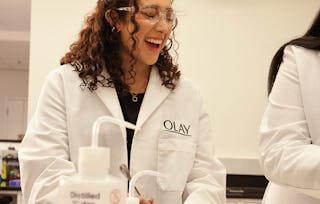
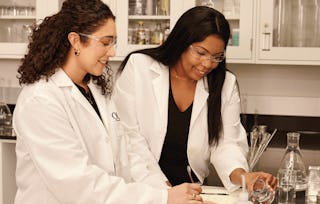
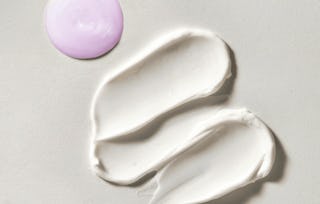
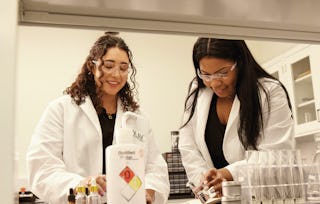
This course will introduce students to the variety of scientific careers in the cosmetics and personal care industry and the skills needed to excel in the industry. Covered topics include product ideation, formulation, testing, manufacture, and post-marketing assessment; skin, hair, and nail biology; and claim substantiation. The course also includes a home-based “lab” where students can apply some of the covered concepts.
In this module, you will be first introduced to the structure of the course. Next, you will look at the structure of the cosmetic companies and the role of entrepreneurship. You will also review major scientific and engineering areas in the personal care industry.
Overall Cosmetic Company Structure and Entrepreneurship Part 1•7 minutes
Overall Cosmetic Company Structure and Entrepreneurship Part 2•6 minutes
So You Want to be a Cosmetic Scientist?•7 minutes
You Like Cosmetics and Manufacturing? Where You Fit In. Part 1•7 minutes
You Like Cosmetics and Manufacturing? Where You Fit In. Part 2•6 minutes
Module 1 Summary•2 minutes
16 readings•Total 89 minutes
Course Introduction•2 minutes
Syllabus•5 minutes
Meet Your Instructors•10 minutes
How to Be Successful in this Course•3 minutes
Program Survey•5 minutes
How to Use Discussion Forums•2 minutes
What strategies make L'Oréal the unbeatable beauty company?•20 minutes
Beauty market | L'Oréal Finance•6 minutes
11 Successful Beauty Entrepreneurs Share Their Best Advice for Starting Over•11 minutes
Top Ten Cosmetics Companies in the World•5 minutes
Cosmetic Product Development: 4 Simple Steps to Launch Your Successful Beauty Product•5 minutes
Engineering the face of cosmetics•2 minutes
Cosmetic Product Development: From Concept to Launch•3 minutes
Why the Cosmetics Supply Chain Needs a Digital Makeover•4 minutes
Cosmetics Industry & Its Complete Supply Chain Challenges•5 minutes
References•1 minute
4 assignments•Total 80 minutes
Cosmetic Industry Structure•20 minutes
So, You Want to be a Cosmetic Scientist?•20 minutes
Cosmetics and Manufacturing•20 minutes
Module 1 Quiz•20 minutes
1 discussion prompt•Total 15 minutes
Meet and Greet•15 minutes
Module 2: From Concept to Reality: How a Dream Becomes a Cosmetic
Module 2•2 hours to complete
Module details
In this module, you will be first introduced to how cosmetic products are developed. Next, you will review a product brief’s significance and how to write one. Finally, you will focus on product testing and the multiple areas that encompass it.
What's included
5 videos7 readings4 assignments
Show info about module content
5 videos•Total 22 minutes
Module 2 Introduction•2 minutes
Cosmetic Product Development Overview•6 minutes
Writing a Brief and Evaluating Prototypes •6 minutes
Product Stability Testing •7 minutes
Module 2 Summary•1 minute
7 readings•Total 32 minutes
2022 Global Cosmetics Market•10 minutes
The Process of Product Development•6 minutes
Elements of a Product Brief: Cosmetics/Personal Care•3 minutes
Uncovering the True Cost of Cosmetic Stability Testing•5 minutes
Stability Testing Guidance for Product Safety and Shelf-life Insight•5 minutes
Product Testing of Cosmetics•2 minutes
References•1 minute
4 assignments•Total 90 minutes
Cosmetic Industry Structure•20 minutes
Writing a Brief and Evaluating Prototypes•20 minutes
Product Testing•20 minutes
Module 2 Quiz•30 minutes
Module 3: We Are Watching You: Cosmetic Regulation Around the World
Module 3•3 hours to complete
Module details
In this module, you will first review the cosmetic definition and regulations within the United States. Next, you will review cosmetic regulations found around the world. Finally, you will delve into cosmetic claims and how they are supported.
What's included
5 videos6 readings4 assignments
Show info about module content
5 videos•Total 20 minutes
Module 3 Introduction•2 minutes
Regulating Cosmetics Globally and in the United States•8 minutes
Claim Substantiation: Process and Enforcement•5 minutes
Global Regulation•4 minutes
Module 3 Summary•2 minutes
6 readings•Total 47 minutes
What You Need to Know about MoCRA and How to Prepare for a New Era of Cosmetics Regulation•10 minutes
Beauty Product Claims & the NAD: Why Substantiation Matters•6 minutes
CeraVe and NARB•5 minutes
Overview of Cosmetic Regulatory Frameworks around the World•15 minutes
References•1 minute
Mid-Course Survey•10 minutes
4 assignments•Total 120 minutes
Cosmetic Definition and Regulation | Labels•20 minutes
Claim Substantiation•20 minutes
Global Regulation•20 minutes
Module 3 Quiz•60 minutes
Module 4: You Look Beautiful: How Winning Cosmetic Formulas Are Created
Module 4•3 hours to complete
Module details
In this module, you will begin by reviewing cosmetic interactions with skin, hair, and nails. Next, you will examine the ingredient categories, functions, technologies, and formulations within cosmetics.
What's included
6 videos10 readings5 assignments
Show info about module content
6 videos•Total 31 minutes
Module 4 Introduction•2 minutes
Formulations for Skin: Science and Art•6 minutes
Cosmetic Ingredients•4 minutes
Cosmetic History and Culture•9 minutes
Cosmetic Formulations•8 minutes
Module 4 Summary•1 minute
10 readings•Total 66 minutes
Skincare 101: The science behind your favorite moisturizers, serums, actives, and more•10 minutes
Skin 2: Accessory structures of the skin and their functions•5 minutes
Ingredient Glossary•5 minutes
Cosmetic Ingredients•5 minutes
The Chemistry of Cosmetics•12 minutes
Read the Labels: CeraVe and La Roche-Posay•5 minutes
An introduction to cosmetic technology•5 minutes
Formulating Cosmetic Emulsions: A Beginner's Guide•10 minutes
Shampoo vs. Body Wash Formulation•8 minutes
References•1 minute
5 assignments•Total 100 minutes
Skin, Hair, and Nail Biology•20 minutes
Cosmetic Ingredients•20 minutes
Ingredient Categories•20 minutes
Cosmetic Formulations•20 minutes
Module 4 Quiz•20 minutes
Module 5: Love That Product: Creating Cosmetic Products That Meet Consumer Expectations
Module 5•3 hours to complete
Module details
In this module, you will explore how consumer and clinical testing serve as essential processes in evaluating cosmetic products, directly influencing product claims and consumer satisfaction. Consumer testing involves gathering feedback from target users to gauge preferences and satisfaction levels, whereas clinical testing involves rigorous scientific studies to assess safety and efficacy.
Fragrances in cosmetics play a vital role in enhancing product appeal, with selection based on chemistry, compatibility, and desired olfactory characteristics. Sensory and formula tests, along with product label reviews, are conducted according to established guidelines to ensure product quality, regulatory compliance, and transparency.
Emulsification techniques are utilized to create creams, involving the blending of water and oil phases to achieve stable, homogeneous mixtures that meet consumer expectations for texture and performance.
What's included
7 videos4 readings4 assignments
Show info about module content
7 videos•Total 45 minutes
Module 5 Introduction•2 minutes
Consumer and Clinical Testing•10 minutes
Fragrances Part 1•6 minutes
Fragrances Part 2•7 minutes
Lab Demonstration 1•9 minutes
Lab Demonstration 2•9 minutes
Module 5 Summary•1 minute
4 readings•Total 24 minutes
Beauty Product Testing Claims•8 minutes
Fragrance in Cosmetics: 'Simple' and Psychological•10 minutes
Formulating Cosmetic Emulsions: A Beginner's Guide•5 minutes
References•1 minute
4 assignments•Total 90 minutes
Consumer and Clinical Testing•20 minutes
Fragrances•20 minutes
Lesson 5.3 Lab•20 minutes
Module 5 Quiz•30 minutes
Module 6: From the Lab to the Factory: Manufacturing Magic
Module 6•3 hours to complete
Module details
In this module, you will understand the sourcing of cosmetic ingredients involves delving into the diverse origins of raw materials, from natural sources like plants and minerals to synthetic compounds produced in laboratories. Exploring pilot plants provides insights into the experimental phases of cosmetic formulation before scaling up to industrial production, highlighting the meticulous process of perfecting formulas. Quality control methodologies in cosmetics encompass rigorous testing procedures, including microbiological assessments and stability tests, ensuring the safety, efficacy, and consistency of products before reaching consumers.
What's included
5 videos11 readings4 assignments
Show info about module content
5 videos•Total 26 minutes
Module 6 Introduction•2 minutes
Sustainable Cosmetics•10 minutes
Product Scale-up•8 minutes
Quality Assurance and Control•5 minutes
Module 6 Summary•2 minutes
11 readings•Total 70 minutes
Embracing Sustainability•5 minutes
Claims for Biossance Skincare Products•5 minutes
How to Research Cosmetic Ingredients for Organic Skincare•4 minutes
Sustainable Sources for Cosmetic Ingredients•11 minutes
A Tour of iLABS' Innovative Cosmetic Manufacturing Facility•7 minutes
Scale-up Considerations for Innovative Cosmetics•11 minutes
Guidance for Industry•13 minutes
Ensuring Quality in Cosmetics•5 minutes
Quality Control in Cosmetics•6 minutes
Quality Control In Cosmetic Manufacturing•2 minutes
References•1 minute
4 assignments•Total 90 minutes
Sustainable Cosmetics•20 minutes
Manufacturing Methods•20 minutes
Quality Assurance and
Control•20 minutes
Module 6 Quiz•30 minutes
Module 7: Career Progression and Course Takeaways
Module 7•2 hours to complete
Module details
In this module, you will hear from a career panel consisting of Dr. Jay Goldring, Dr. Maria Sousa, and Manessa Lormejuste. This career panel will discuss training, careers, and their passions for the industry.
When will I have access to the lectures and assignments?
To access the course materials, assignments and to earn a Certificate, you will need to purchase the Certificate experience when you enroll in a course. You can try a Free Trial instead, or apply for Financial Aid. The course may offer 'Full Course, No Certificate' instead. This option lets you see all course materials, submit required assessments, and get a final grade. This also means that you will not be able to purchase a Certificate experience.
What will I get if I purchase the Certificate?
When you purchase a Certificate you get access to all course materials, including graded assignments. Upon completing the course, your electronic Certificate will be added to your Accomplishments page - from there, you can print your Certificate or add it to your LinkedIn profile.
Is financial aid available?
Yes. In select learning programs, you can apply for financial aid or a scholarship if you can’t afford the enrollment fee. If fin aid or scholarship is available for your learning program selection, you’ll find a link to apply on the description page.