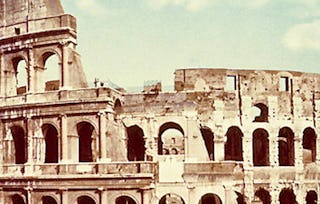
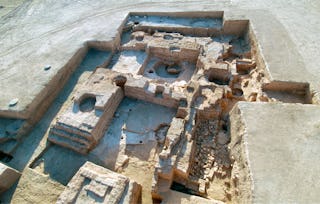
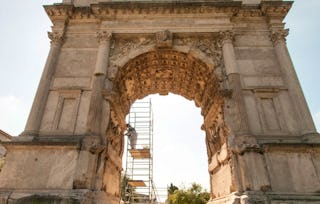
The course presents the topographical lay-out of the most relevant part of the city. Research developed on the Palatine since the end of last century by the team of Sapienza Classical Archaeologists opened a new phase in the urban archaeological investigation and in the scientific debate about the relation between archaeological features and literary tradition as well as the “correct use“ of both kind of evidence, key issues of wide archaeological and historical significance.
Students will be introduced to methods and procedures developed and successfully applied by Sapienza School of Classical Archaeology in collection, analyses, integration and interpretation of complex and multi-stratified contexts, including actual methods and innovative instruments based on a deep archaeological and historical knowledge but also on ICT technologies.
The course will introduce students to the way we have been reflecting on over the last twenty years and still are engaged with the study of the past of our cities, beginning from the most complex case in the ancient Mediterranean World: the core of Italy and of Roman Empire. On the other hand, knowledge means also preservation and defense of material remains and cultural memory.
Studiare una città antica, così come medioevale o moderna, significa definire storie locali basate sulla ricostruzione dei paesaggi e dei loro mutamenti attraverso i secoli. Dato lo stato frammentario della documentazione archeologica, è necessario creare immagini nuove che restituiscano l’aspetto fisico del paesaggio urbano per riportarlo in vita. Non è sufficiente analizzare i molti elementi antichi ancora visibili nella città di oggi. Per definire gli elementi che componevano il paesaggio urbano, devono essere riallacciati i nessi e le relazioni che esistevano tra oggetti e architetture, visibili e non visibili, che sono stati spezzati dal tempo.
Il paesaggio e il suo contenuto sono elementi vitali e rilevanti del patrimonio culturale di ogni nazione. Il corso introdurrà gli studenti al modo con il quale, durante gli ultimi venti anni, abbiamo condotto lo studio del passato delle nostre città, a partire dal caso più complesso nel mondo mediterraneo: il cuore dell’Italia e dell’Impero Romano. E’ bene ricordare che la conoscenza significa conservazione e protezione dei resti materiali e della memoria culturale.
“Paesaggi di Roma Antica. Archeologia e storia del Palatino” presenta ad un vasto pubblico l’assetto topografico della parte più importante della città (secondo gli storici antichi Roma sarebbe stata fondata sul Palatino). Le ricerche, condotte sul Palatino dal team di archeologi classici della Sapienza dalla fine del ‘900, hanno aperto una nuova fase nello sviluppo dell’archeologia urbana a Roma e nel dibattito sulla possibile relazione tra dati archeologici e tradizione letteraria e sul “buon uso” di entrambe le classi di dati. Si tratta di un argomento chiave, di grande significato archeologico e storico.
Gli studenti del corso saranno introdotti a metodi e procedure sviluppate e impiegato con successo dalla Scuola di Archeologia Classica della Sapienza per la raccolta, analisi, integrazione e interpretazione di contesti complessi e multi stratificati, inclusi attuali strumenti e metodi innovativi, basati su un’approfondita conoscenza archeologica e storica ma anche su tecnologie informatiche.
What's included
4 videos1 assignment
Show info about module content
4 videos•Total 30 minutes
1.1 Archeologia Classica: manufatti (oggetti, architetture, paesaggi) e storia.•8 minutes
1.2 Parlando con gli oggetti: dalla ceramica alla cronologia.•7 minutes
1.3 Parlando con la terra, pietre e mattoni: da strati e muri alla Storia.•8 minutes
1.4 Introduzione a Roma Antica.•8 minutes
1 assignment•Total 30 minutes
Quiz week 1•30 minutes
Da una terra di confine al più grande insediamento del Lazio (13° - 9° secolo a.C.).
Module 2•1 hour to complete
Module details
What's included
4 videos1 assignment
Show info about module content
4 videos•Total 30 minutes
2.1 Prima della città: età pre urbana e proto urbana.•5 minutes
2.2 Il Lazio dall’età del Bronzo all’età del Ferro.•12 minutes
2.3 Roma dall’età del Bronzo all’età del Ferro.•7 minutes
2.4 Il Palatino dall’età del Bronzo all’età del Ferro.•7 minutes
1 assignment•Total 20 minutes
Quiz week 2•20 minutes
Nasce una città governata da re (8° - 7° secolo a.C.).
Module 3•1 hour to complete
Module details
What's included
4 videos1 assignment
Show info about module content
4 videos•Total 35 minutes
3.1 La fondazione di Roma: mito e riti.•6 minutes
3.2 La fondazione di Roma: archeologia•9 minutes
3.3 Il Palatino durante il regno dei primi re 1.•11 minutes
3.4 Il Palatino durante il regno dei primi re 2.•8 minutes
1 assignment•Total 30 minutes
Quiz week 3•30 minutes
Nuovi re prima di un nuovo Stato (6° - 3° secolo a.C.). Lezioni.
Module 4•1 hour to complete
Module details
What's included
4 videos1 assignment
Show info about module content
4 videos•Total 36 minutes
4.1 Roma durante il regno degli ultimi re.•7 minutes
4.2 Il Palatino durante il regno degli ultimi re: residenze aristocratiche e santuari.•16 minutes
4.3 Dalla Monarchia alla Repubblica.•6 minutes
4.4 Il Palatino in età alto e medio repubblicana.•6 minutes
1 assignment•Total 30 minutes
Quiz week 4•30 minutes
I padroni di un impero (2° - fine del 1° secolo a.C.).
Module 5•1 hour to complete
Module details
What's included
4 videos1 assignment
Show info about module content
4 videos•Total 39 minutes
5.1 Il Palatino in età tardo repubblicana.•11 minutes
5.2 Templi.•8 minutes
5.3 Case 1.•11 minutes
5.4 Case 2 (la casa di Ottaviano).•10 minutes
1 assignment•Total 30 minutes
Quiz week 5•30 minutes
La Capitale dell’Impero (fine del 1° secolo a.C. – inizi del 1° secolo d.C.)
Module 6•1 hour to complete
Module details
What's included
4 videos1 assignment
Show info about module content
4 videos•Total 29 minutes
6.1 Dalla Repubblica all’Impero.•5 minutes
6.2 Il Palatino dopo la battaglia di Azio (31 a.C.).•7 minutes
6.3 La Casa di Augusto 1.•9 minutes
6.4 La Casa di Augusto 2.•9 minutes
1 assignment•Total 30 minutes
Quiz week 6•30 minutes
La città d’oro (1° - 2° secolo d.C.).
Module 7•1 hour to complete
Module details
What's included
4 videos1 assignment
Show info about module content
4 videos•Total 31 minutes
7.1 Il Palatino dopo la morte di Augusto (la dinastia Giulio-Claudia).•6 minutes
7.2 Il grande incendio del 64 d.C. e il Palatino di Nerone.•9 minutes
7.3 Un nuovo palazzo per l’Imperatore.•10 minutes
7.4 Le pendici del Palatino.•6 minutes
1 assignment•Total 30 minutes
Quiz week 7•30 minutes
La città d’oro e il suo declino (3° – 6° secolo d.C.).
Module 8•1 hour to complete
Module details
What's included
4 videos1 assignment
Show info about module content
4 videos•Total 23 minutes
8.1 Un palazzo imperiale sempre più grande.•4 minutes
8.2 Una residenza tardo antica.•6 minutes
8.3 Un nuovo santuario per la dea Vesta.•7 minutes
8.4 Chiese sul Palatino.•5 minutes
1 assignment•Total 30 minutes
Quiz week 8•30 minutes
Instructor
Instructor ratings
Instructor ratings
We asked all learners to give feedback on our instructors based on the quality of their teaching style.
Sapienza University of Rome, founded in 1303 by Pope Boniface VIII, is the oldest University in Rome and the largest in Europe.
Since its founding over 700 years ago, Sapienza has played an important role in Italian history and has been directly involved in key changes and developments in society, economics and politics. It has contributed to the development of Italian and European science and culture in all areas of knowledge.
The main campus, designed by Marcello Piacentini, was opened in 1935. It is situated close to the city centre, and is the largest in Europe - a real city within a city where teaching activities are integrated with libraries and museums as well as comprehensive student services. Faculties and Departments also carry out their activities in decentralized locations in different parts of the city. There are two other university campuses elsewhere in Lazio.
Sapienza offers a vast array of courses including degree programmes, PhD courses, one to two year professional courses, and Specialization Schools in many disciplines, run by 63 Departments and 11 Faculties.
When will I have access to the lectures and assignments?
To access the course materials, assignments and to earn a Certificate, you will need to purchase the Certificate experience when you enroll in a course. You can try a Free Trial instead, or apply for Financial Aid. The course may offer 'Full Course, No Certificate' instead. This option lets you see all course materials, submit required assessments, and get a final grade. This also means that you will not be able to purchase a Certificate experience.
What will I get if I purchase the Certificate?
When you purchase a Certificate you get access to all course materials, including graded assignments. Upon completing the course, your electronic Certificate will be added to your Accomplishments page - from there, you can print your Certificate or add it to your LinkedIn profile.
Is financial aid available?
Yes. In select learning programs, you can apply for financial aid or a scholarship if you can’t afford the enrollment fee. If fin aid or scholarship is available for your learning program selection, you’ll find a link to apply on the description page.