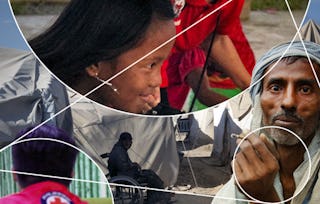
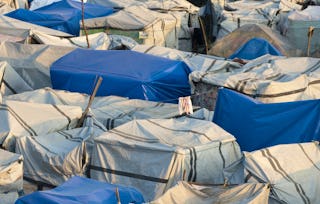
NCDs are the leading cause of death in almost every region of the world, and place a huge burden on individuals, families and societies. Humanitarian settings have a negative effect on the levels of disease, and the possibility of treatment. The importance of NCDs in global health is acknowledged by their inclusion in the Sustainable Development Goals, which call for a reduction of a third in premature mortality from NCDs by 2030. However, NCDs have until recently received little attention in humanitarian settings, leaving prevention, care and treatment needs largely unaddressed among some of the most vulnerable populations. According to the World Health Organization, 70 percent of global deaths are due to NCDs. The four main disease groups which cause the greatest number of deaths are cardiovascular disease, cancer, diabetes and chronic obstructive pulmonary disease (including asthma).
The course will provide knowledge about issues and dilemmas that occur around NCDs in humanitarian settings and possible solutions.
Why are NCDs a problem in humanitarian emergencies or crises? Natural disasters and complex emergencies, including armed conflict, have a negative effect on the levels of disease, and on the possibilities for preventing, treating and caring for people with NCDs. People living with NCDs often need continuous care to avoid disease progression, and disrupted treatment due to natural disaster or emergencies pose a large health challenge. In conflict situations and fragile contexts, the challenge of disrupted care and treatment may be exacerbated – an estimated 65 million people have been forcibly displaced by conflict, displacement lasts longer, and at times health systems and health personnel are deliberately targeted.
In module one you will learn about why NCDs have increased in the world as a whole and about why NCDs are a particular problem in humanitarian emergencies or crises. Natural disasters and complex emergencies including armed conflict may have a negative effect, both on the levels of disease, and on the possibilities for preventing, treating or caring for people with NCDs.
What's included
6 videos7 readings3 assignments
Show info about module content
6 videos•Total 57 minutes
Siri Tellier: Why is it important?•8 minutes
Alessandro Demaio: The "big four" NCDs Explained•16 minutes
Sylvia Khamati: The double burden of disease - Kenya refugee camps•8 minutes
Mouna Mayoufi: Lack in quality of care - Syria•9 minutes
Heidi Christensen: Challenges for refugees on the move - Lesbos•6 minutes
Experiences from refugees affected by NCDs•9 minutes
7 readings•Total 190 minutes
A call to action•20 minutes
Identifying and Describing the Impact•40 minutes
Siri Tellier: A Background Paper•10 minutes
Ten essential questions•40 minutes
Care in Emergencies•20 minutes
Conflict-affected populations•10 minutes
Internally Displaced Women and Children•50 minutes
3 assignments
Why is it important?•0 minutes
A Call to Action•0 minutes
Identifying and Describing the Impact•0 minutes
Module - What is being done?
Module 2•6 hours to complete
Module details
In module two you will learn about some of the basic approaches of humanitarian action and how they might that apply to NCDs. This would include basic concepts, and how they might help or hamper the response to NCDs.
What's included
4 videos9 readings3 assignments
Show info about module content
4 videos•Total 36 minutes
Siri Tellier: What is being done?•7 minutes
Sylvia Khamati: Community awareness needed - Kenya•7 minutes
Mouna Mayoufi: Data needed to improve preparedness - Libya•10 minutes
Public Health Interventions in Humanitarian Crises•40 minutes
Social Determinants•30 minutes
Interventions for Primary Health Care•90 minutes
Diabetes care in a complex humanitarian emergency setting•40 minutes
Ebola Crisis•15 minutes
Guidelines and mHealth for Vulnerable Populations•30 minutes
3 assignments
What is being done?•0 minutes
The Sphere Project•0 minutes
Emergency Health Kit•0 minutes
Module: Challenges and Opportunities
Module 3•5 hours to complete
Module details
In module three you will learn about prioritization (the classical first priority for health response to save lives, and concentrate on excess mortality and morbidity), the importance of risk analysis (the risk equation), the challenges involved in transition from acute to longer term assistance – from blueprint to contextualizing and building capacity – as well as about longer term budgetary issues.
What's included
4 videos7 readings3 assignments
Show info about module content
4 videos•Total 32 minutes
Siri Tellier: Challenges and Opportunities•7 minutes
The University of Copenhagen is the oldest University in Denmark; founded in 1479, and with over 38,000 students and more than 9,000 employees. The purpose of the University is to conduct research and provide education to the highest academic level. Based in Denmark's capital city it is one of the top research institutions in Europe.
When will I have access to the lectures and assignments?
To access the course materials, assignments and to earn a Certificate, you will need to purchase the Certificate experience when you enroll in a course. You can try a Free Trial instead, or apply for Financial Aid. The course may offer 'Full Course, No Certificate' instead. This option lets you see all course materials, submit required assessments, and get a final grade. This also means that you will not be able to purchase a Certificate experience.
What will I get if I purchase the Certificate?
When you purchase a Certificate you get access to all course materials, including graded assignments. Upon completing the course, your electronic Certificate will be added to your Accomplishments page - from there, you can print your Certificate or add it to your LinkedIn profile.
Is financial aid available?
Yes. In select learning programs, you can apply for financial aid or a scholarship if you can’t afford the enrollment fee. If fin aid or scholarship is available for your learning program selection, you’ll find a link to apply on the description page.