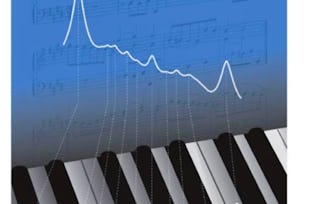
This course explores the mystery of music and emotion. Learn how melodies and rhythms can wordlessly “speak,” and why we are willing to listen. See how musical taste forms and learn why it is so personal. We first examine music-induced emotions in the tight bond between auditory and motor systems: the link that makes song and dance such perfect partners. Then we include the reward system to build a triangle of neural connectivity, giving each music lover their own unique “listener profile” of musical enjoyment.
Upon completion of this course, you will understand how music gives rise to emotions and be able to list the three stages of emotion generation and how it works when listening to music. You will also be able to describe your personal listener profile and discuss how singing or listening to a song we like causes chemical reactions in our brain that release dopamine, encouraging us to keep listening. The course reveals why we like certain songs by analyzing perception across musicians and non-musicians, cultural influences, metrical structures, and tonality. All of these factors show that every emotional response is unique, as it also depends on internal and external conditions, such as when (and with whom!) we are listening.
Welcome to The Neuroscience of Music and Emotion! This module includes what you need to know to get the most out of your Berklee massive online course. We start with the neuroanatomy of our brains to help you get familiar with the regions and structures that give rise to musical thoughts, performance gestures, and feelings. By the end of this lesson, you will be able to identify where pitch and timing cues are processed, describe the difference between the dorsal and ventral auditory pathways, and list the major nuclei of the dopaminergic reward system.
Ventral (What) and Dorsal (Where, When) Pathways•4 minutes
Music and Action: Hearing, Singing, and Dancing Connectivity•4 minutes
The Dopamine Reward System•4 minutes
6 readings•Total 40 minutes
Course Resources•5 minutes
Earn A Course Certificate•7 minutes
Connect with Your Classmates•3 minutes
Glossary of Terms•10 minutes
Lesson 1 Review•10 minutes
Lesson 1 Review and Progress Check-in•5 minutes
1 assignment•Total 30 minutes
Lesson 1 Assignment•30 minutes
2 discussion prompts•Total 15 minutes
Meet and Greet•10 minutes
Brain Structures and Tone and/or Beat deafness•5 minutes
Lesson 2: The Setup - Predicting and Anticipating Musical Pleasure
Module 2•1 hour to complete
Module details
In lesson 2 we explore how musical taste forms through passive exposure to music in the environment. We start with rhythm perception: extracting a pulse from accented beats to predict upcoming musical events. Next, we look at tonality perception and how musical training strongly influences the sense of consonance and dissonance. Then we describe how some vocal melodies have a universal, culture-general function, like dancing, healing, and soothing infants. Finally, we see where our own preference for novel vs. familiar music relates to an appetite for aesthetic risk-taking. By the end of this lesson, you will be able to identify how musical tastes develop and what guides an individual to be open to (or not) new musical styles.
What's included
6 videos3 readings1 assignment1 discussion prompt
Show info about module content
6 videos•Total 25 minutes
What You'll Learn in Lesson 2•2 minutes
Statistical Learning of Metrical Structure•5 minutes
Tonality: Goodness of Fit•5 minutes
Cultural-General and Culture-Specific Differences•5 minutes
Simplicity, Complexity, and Liking•4 minutes
Your Appetite for (Musical) Risk•4 minutes
3 readings•Total 20 minutes
Definitions for Lesson 2•5 minutes
Lesson 2, Topic 1 Review•10 minutes
Lesson 2 Review and Progress Check-in•5 minutes
1 assignment•Total 30 minutes
Lesson 2 Assignment•30 minutes
1 discussion prompt•Total 5 minutes
Your Musical Taste•5 minutes
Lesson 3: The Payoff - Emotional Responses to Music
Module 3•1 hour to complete
Module details
In lesson 3 we discuss emotional responses to music. We start by defining what an emotion is and discuss why it depends on context. Then we define emotional arousal and valence in terms of musical features. For a better understanding of the range of emotional responses, we look at musical anhedonia (absence of pleasure from music) and its opposite: music-evoked chills. Next, we describe the three stages of emotion generation caused by music and the processes involved. Finally, we look at why most listeners get a good feeling from sad songs. By the end of this lesson, you will have a better understanding of what composers and songwriters can expect if they want their music to generate an emotional response in a listener.
What's included
6 videos3 readings1 assignment1 discussion prompt
Show info about module content
6 videos•Total 22 minutes
What You'll Learn in Lesson 3•1 minute
What's an Emotion?•5 minutes
Automatic Responses: Chills and Anhedonia•4 minutes
Predicting and Anticipating•4 minutes
Confirmation and Violation•4 minutes
Sad Songs•4 minutes
3 readings•Total 20 minutes
Definitions for Lesson 3•5 minutes
Lesson 3 Review•10 minutes
Lesson 3 Review and Progress Check-in•5 minutes
1 assignment•Total 30 minutes
Lesson 3 Assignment•30 minutes
1 discussion prompt•Total 10 minutes
Tools to Influence Emotion•10 minutes
Lesson 4: The Listener Profile - The Music of You
Module 4•2 hours to complete
Module details
In our final lesson we describe the listener profile: the uniqueness of each person’s response to music. We start with differentiating between liking and wanting to learn how a simple hedonic response (“I like that”) differs from a strongly motivated desire to acquire something (“I must hear that again!”). We see how rapidly listeners make judgments of liking vs. disliking some musical styles. Next, we look at bonding to music in adolescence to learn why adults tend to have a “reminiscence bump” for the music of their teenage years. This leads to how our favorite music activates the “default network,” encouraging our brain to mind-wander or daydream during enjoyment. Finally, we illustrate the listening brain in its search for the rewards found in the musical elements of melody, lyrics, rhythm, and timbre, or the aesthetic elements of novelty, authenticity, and realism. We summarize how a listener’s internal conditions and external context ultimately work together to determine music-evoked emotional responding.
Founded in 2002, Berklee Online is the premier innovator and largest provider of worldwide music education, offering more than 75,000 students from 144 countries the renowned curriculum of Berklee College of Music, at a fraction of the cost. Through Berklee Online’s award-winning online courses, certificates, bachelor’s, and master’s degree programs, students receive expert music instruction and emerge with the skills to exceed the demands of the music industry.
When will I have access to the lectures and assignments?
To access the course materials, assignments and to earn a Certificate, you will need to purchase the Certificate experience when you enroll in a course. You can try a Free Trial instead, or apply for Financial Aid. The course may offer 'Full Course, No Certificate' instead. This option lets you see all course materials, submit required assessments, and get a final grade. This also means that you will not be able to purchase a Certificate experience.
What will I get if I purchase the Certificate?
When you purchase a Certificate you get access to all course materials, including graded assignments. Upon completing the course, your electronic Certificate will be added to your Accomplishments page - from there, you can print your Certificate or add it to your LinkedIn profile.
Is financial aid available?
Yes. In select learning programs, you can apply for financial aid or a scholarship if you can’t afford the enrollment fee. If fin aid or scholarship is available for your learning program selection, you’ll find a link to apply on the description page.