When you enroll in this course, you'll also be enrolled in this Specialization.
Learn new concepts from industry experts
Gain a foundational understanding of a subject or tool
Develop job-relevant skills with hands-on projects
Earn a shareable career certificate
There are 5 modules in this course
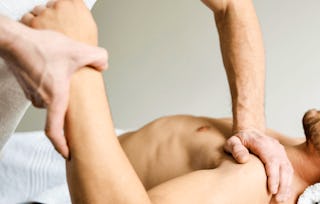
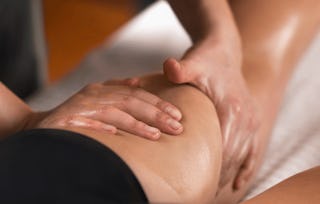
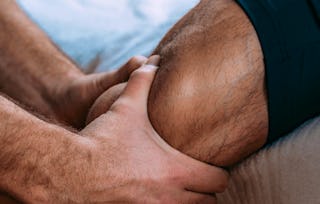
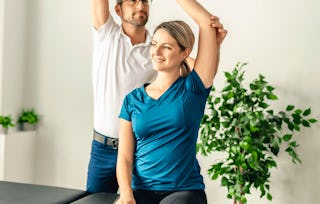
Hip, leg, ankle, and foot problems can limit performance, change movement patterns, and make running, jumping, training, or even walking uncomfortable. By the end of this course, learners will understand how lower-body dysfunctions often connect back to the hip and how sports massage techniques can be used to support better movement, recovery, and performance.
Led by Stuart Hinds, a three-time appointed soft tissue therapist for the Australian Olympic medical team, this course brings elite sports therapy experience into a practical learning format. The course focuses on lower-limb assessment, treatment strategy, and clinical reasoning for common athletic and overuse conditions.
Through detailed video demonstrations and real-world examples, learners explore advanced sports massage techniques for issues such as shin splints, Achilles tendon pain, plantar fasciitis, and hip-related biomechanical compensation.
Massage, bodywork, fitness, and sports professionals will gain practical tools for treating lower-limb dysfunctions, while general learners will better understand how the hip, leg, and foot work together. This course offers a functional approach to supporting mobility, recovery, injury prevention, and athletic performance.
Module 1 provides a detailed, hands-on exploration of three common lower-limb conditions frequently seen in runners and active clients: medial tibial stress syndrome (shin splints), Achilles tendon pain, and plantar fasciitis. The instructor explains how these conditions coexist, the underlying anatomy, and how altered load, footwear, training surfaces, and rapid changes in training volume contribute to their development. Using clear anatomical demonstrations, the module shows how deep-compartment muscles such as tibialis posterior, flexor digitorum, and flexor hallucis longus contribute to shin-splint symptoms, how Achilles tendinopathy progresses from reactive to degenerative states, and where plantar fascia pain typically localises. Learners are guided step by step through palpation, soft-tissue release, trigger-point work, assessment–treatment cycling, and real-time symptom modification. This module provides practical, clinically usable techniques for treating lower-leg pain and optimising load management.
What's included
6 videos3 readings1 assignment1 discussion prompt
Show info about module content
6 videos•Total 34 minutes
Introduction•2 minutes
Condition Overview•4 minutes
Predisposition•1 minute
Shin Splints•12 minutes
Plantar Fasciitis•7 minutes
Achilles Tendonitis•10 minutes
3 readings•Total 30 minutes
Syllabus•10 minutes
Course Workbook•10 minutes
Student Notes•10 minutes
1 assignment•Total 15 minutes
Practice Assignment•15 minutes
1 discussion prompt•Total 10 minutes
Introduction•10 minutes
Bonus Material: Assessment and Communication
Module 2•27 minutes to complete
Module details
This module demonstrates how effective client communication and targeted questioning enhance assessment outcomes and guide safe treatment decisions. Learners will observe how to gather relevant training and injury history, set expectations, identify red flags, and educate active clients on load management and self-care strategies that support recovery and performance.
What's included
1 video1 assignment
Show info about module content
1 video•Total 12 minutes
Athlete Interview - Monica Brenan•12 minutes
1 assignment•Total 15 minutes
Module Quiz•15 minutes
Hip Restriction Procedure
Module 3•1 hour to complete
Module details
Module 3 teaches the complete hip-restriction protocol, emphasising how hip mobility directly influences lower-limb loading and contributes to problems such as shin splints, Achilles pain, and plantar fascia irritation. The instructor demonstrates how to evaluate hip extension, identify restrictions in the iliopsoas, rectus femoris, thoracolumbar junction, and adductor group, and determine how these limitations inhibit gluteus medius function. Through precise palpation, trigger-point identification, and broad-contact release techniques, learners are shown how to treat anterior-hip tightness, thoracolumbar restrictions, and adductor magnus dominance. The module also breaks down passive release methods, length-tension strategies, and sequencing of treatment, explaining how each step improves pelvic control, running mechanics, and lower-limb stability. By the end, therapists will be able to implement the full hip-release protocol as the foundation for treating lower-extremity injuries.
What's included
7 videos2 readings1 assignment
Show info about module content
7 videos•Total 17 minutes
Introduction•2 minutes
Hip Restriction Assessment•1 minute
Thoracolumbar Restriction•2 minutes
Hip Extension Anterior Restriction•3 minutes
Abduction Assessment•1 minute
Hip Abduction•5 minutes
Internal Rotation•2 minutes
2 readings•Total 20 minutes
Course Workbook•10 minutes
Student Notes•10 minutes
1 assignment•Total 15 minutes
Module Reflection Quiz•15 minutes
Practice Assignments
Module 4•27 minutes to complete
Module details
This module provides an opportunity to consolidate and apply what you’ve learned throughout the course. You will review key concepts, reflect on clinical relevance, and complete a short practice assignment and/or course reflection quiz. The goal is to reinforce understanding and strengthen your ability to integrate these skills into real-world client care.
What's included
1 video1 assignment1 discussion prompt
Show info about module content
1 video•Total 2 minutes
Summary•2 minutes
1 assignment•Total 15 minutes
Practice Assignment•15 minutes
1 discussion prompt•Total 10 minutes
Summary•10 minutes
Course Exam
Module 5•1 hour to complete
Module details
This final exam is designed to assess your understanding of the key concepts presented throughout the course. Please review all video lessons and written materials before beginning. A passing score of 70% or higher is required to successfully complete the course and earn your CE certificate. You may reference your notes during the exam. Once you pass, your certificate will be available for immediate download.
What's included
1 assignment
Show info about module content
1 assignment•Total 60 minutes
Course Exam•60 minutes
Earn a career certificate
Add this credential to your LinkedIn profile, resume, or CV. Share it on social media and in your performance review.
Niel Asher Education is a world leader in evidence-based online education for massage therapists, manual therapists, and allied health professionals. Our mission is to empower practitioners worldwide with accessible, high-quality training that bridges traditional bodywork, modern rehabilitation, and integrative health science.
When will I have access to the lectures and assignments?
To access the course materials, assignments and to earn a Certificate, you will need to purchase the Certificate experience when you enroll in a course. You can try a Free Trial instead, or apply for Financial Aid. The course may offer 'Full Course, No Certificate' instead. This option lets you see all course materials, submit required assessments, and get a final grade. This also means that you will not be able to purchase a Certificate experience.
What will I get if I subscribe to this Specialization?
When you enroll in the course, you get access to all of the courses in the Specialization, and you earn a certificate when you complete the work. Your electronic Certificate will be added to your Accomplishments page - from there, you can print your Certificate or add it to your LinkedIn profile.
Is financial aid available?
Yes. In select learning programs, you can apply for financial aid or a scholarship if you can’t afford the enrollment fee. If fin aid or scholarship is available for your learning program selection, you’ll find a link to apply on the description page.