When you enroll in this course, you'll also be enrolled in this Specialization.
Learn new concepts from industry experts
Gain a foundational understanding of a subject or tool
Develop job-relevant skills with hands-on projects
Earn a shareable career certificate
There are 4 modules in this course
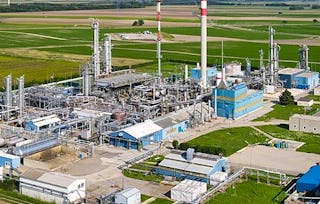
The course on "Midstream Oil & Gas Processing" provides a comprehensive understanding of the various processes involved in the midstream Oil & Gas operations such as transportation, separation, stage separation and treatment of recovered oil and gas, as well as the storage of hydrocarbons.
This course starts with exploring the fundamentals of transportation and gathering stations, including pipeline specifications, flow dynamics, measurement techniques and challenges associated with heavy oil transportation.
It explores separation systems starting from the principles and equipment used in separating oil and gas in production facilities. This includes surface production/separation facilities, equilibrium relations, test separators, group separators and the design theories of two-phase and three-phase separation systems.
It covers stage separation, highlighting its applicability and advantages in optimizing production. Additionally, 3-phase separation systems are discussed, including types of equipment, selection considerations, operating problems and sizing of separators.
Furthermore, it gives insights into the treatment of recovered oil, focusing on crude oil treating systems, heat transfer equipment, electrostatic heater treaters, oil dehydrators, emulsion treating, demulsification, oil desalting, crude stabilization and produced water treatment methods.
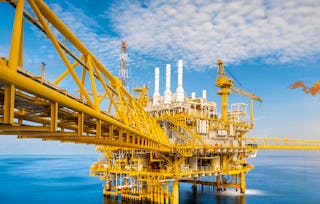
The module concludes by addressing the storage and vapor recovery of hydrocarbons, including onshore and offshore storage facilities, principles of vapor recovery and considerations for safe storage practices.
Target learners:
Students pursuing Diploma / UG / PG Programs in Chemical/ Petroleum/ Oil and Gas Engineering.
Faculties / Working Professionals in the above domain & other aspiring learners
Prerequisite: Basic Chemical/ Petroleum/ Oil and Gas Engineering
The module on "Transportation and Gathering Station" provides a complete understanding of the processes and technologies involved in gathering and transporting oil and gas from the field. The module begins with an introduction to gathering stations, highlighting their role in collecting and transporting hydrocarbons from various wells.
This module delves into the principles of flow in pipes, pipeline specifications and the automation of pipelines using SCADA systems. Learners will gain insights into different types of measurements used in the oil and gas field, including flow rate, pressure and temperature measurements.
The module covers types of pumps, compressors and booster stations used for fluid transportation, along with their applications and operational considerations. Learners will also understand fluid dynamics and flow patterns of oil and gas mixtures, as well as the impact of non-isothermal flow on pumping operations.
Furthermore, the module explores the transportation of heavy oil, addressing the challenges and specialized techniques involved in moving viscous oil. Learners will study corrosion monitoring and control, as well as wax deposition and prevention methods to ensure the integrity and efficiency of the transportation system. Also, artificial lift methods are discussed, providing learners with an understanding of the techniques employed to enhance production from wells with declining reservoir pressure.
What's included
13 videos1 assignment
Show info about module content
13 videos•Total 100 minutes
About the Specialization•3 minutes
About the Course•1 minute
Introduction to Gathering Stations•10 minutes
Principles of Flow in Pipes, Pipeline Specification, Pipeline Automation and SCADA•12 minutes
Types of Measurements in Oil and Gas Field•9 minutes
Types of Pumps, Compressors, and Booster Station - Part 1•9 minutes
Types of Pumps, Compressors and Booster Station - Part 2•6 minutes
Fluid Dynamics and Flow Pattern of Oil and Gas Mixtures•8 minutes
Non-isothermal Flow and its Effect on Pumping Operation•11 minutes
Transportation of Heavy Oil•10 minutes
Corrosion Monitoring and Control Wax Deposition and Prevention - Part 1•8 minutes
Corrosion Monitoring and Control Wax Deposition and Prevention - Part 2•7 minutes
Artificial Lift Methods•6 minutes
1 assignment•Total 30 minutes
Assignment on Transportation and Gathering Station•30 minutes
Separation Systems
Module 2•2 hours to complete
Module details
The module on "Separation Systems" provides an insight into the principles and processes involved in separating oil and gas in production facilities. The module begins with an introduction to separation in oil and gas production, highlighting the importance of effective separation for maximizing recovery.
It explores surface production/separation facilities, gaining an overview of their schematic and functionality, factors impacting recovery in separators and understanding of the basic equilibrium relations for complex mixtures.
The module covers the key components of test separators and group separators, including slug catchers. Learners will gain insights into the functionality and design considerations of these separators for efficient separation. It delves into two-phase separation, focusing on the functional components and types of separators used in the industry. Learners will understand the design theories behind two-phase separators, including sizing and operational parameters.
By the end of the module, learners will have a solid understanding of separation systems in oil and gas production. They will be equipped with knowledge of surface production/separation facilities, equilibrium relations, test separators, group separators, slug catchers, and the design principles of two-phase separators. This knowledge will enable them to analyze and optimize separation processes, ensuring effective recovery of oil and gas resources.
What's included
9 videos1 assignment
Show info about module content
9 videos•Total 82 minutes
Introduction to Separation in Oil and Gas Production•7 minutes
Surface Production/Separation Facility - Schematic and Overview•13 minutes
Factors Affecting Recovery in the Separator•11 minutes
Basic Equilibrium Relations for Complex Mixtures•7 minutes
Overview of Test separator and group separators, slug catchers - Part 1•11 minutes
Overview of Test separator and group separators, slug catchers - Part 2•4 minutes
2-phase: Functional Components of Separators, Types of Separators - Part 1•9 minutes
2-phase: Functional Components of Separators, Types of Separators - Part 2•7 minutes
2-phase: Design Theory•13 minutes
1 assignment•Total 30 minutes
Assignment on Separation Systems•30 minutes
Stage Separation and 3 phase Separators
Module 3•2 hours to complete
Module details
The module on "Stage Separation and 3-Phase Separators" provides a comprehensive understanding of the principles and applications of stage separation and the design and operation of 3-phase separation systems. The module begins by introducing the concept of stage separation and its relevance in the oil and gas industry.
It explores the applicability of stage separation, its advantages and limitations in optimizing production and recovery. The design theory of 3-phase separation systems is extensively discussed covering sizing of separators, considering factors such as flow rates, fluid properties and separation efficiencies.
Additionally, the module explores current technological trends and advances in separations giving insights into innovative separation techniques, emerging equipment and industry practices.
By the end of the module, learners will have a solid understanding of stage separation and 3-phase separation systems. They will be equipped with the knowledge to evaluate the applicability of stage separation, design and operate 3-phase separation equipment and stay updated with the latest technological advancements in separations.
What's included
7 videos1 assignment
Show info about module content
7 videos•Total 67 minutes
Introduction to Stage Separation and 3-phase Separation •8 minutes
Stage Separation and it’s Applicability•12 minutes
Type of Equipment, Selection Considerations and Operating Problems - Part 1•13 minutes
Type of Equipment, Selection Considerations and Operating Problems - Part 2•6 minutes
Design Theory of Three-phase Separation•7 minutes
Sizing of Separators •9 minutes
Current Technological Trends and Advances in Separations•12 minutes
1 assignment•Total 30 minutes
Assignment on Stage Separation and 3 phase Separators•30 minutes
Treatment of Recovered Oil and Storage
Module 4•2 hours to complete
Module details
The module on "Treatment of Recovered Oil and Storage" provides a comprehensive understanding of the processes and equipment involved in treating and storing recovered oil. The module begins with an introduction to crude oil treating systems, emphasizing their importance in ensuring the quality and stability of crude oil.
It explores heat transfer equipment used in oil and gas treatment, including horizontal and vertical heater treaters, giving insights into the principles and applications of heat transfer in various treatment processes. The module covers electrostatic heater treaters and oil dehydrators, addressing their functionality and significance in removing impurities and water from the oil. It also covers emulsion treating and demulsification techniques to optimize oil quality.
Treatment methods such as oil de-salting systems and caustic wash are extensively discussed, providing an understanding of their role in removing contaminants from the crude oil. Crude stabilization, including types of stabilizers, equipment details and process schemes is also explored. It also investigates produced water treatment methods and the equipment used in water injection system treatment and sand management.
The module concludes with a focus on storage and vapor recovery. Learners will gain knowledge about onshore and offshore hydrocarbon storage facilities and understand the principles and design considerations for vapor recovery from field production and storage tanks.
What's included
13 videos1 assignment
Show info about module content
13 videos•Total 115 minutes
Introduction to Crude Oil Treating Systems•8 minutes
Treating Equipment - Horizontal and Vertical Heater Treaters•8 minutes
Heat Transfer Principles and Applications in Oil and Gas Treatment•9 minutes
Electrostatic Heater Treaters and Oil Dehydrators•6 minutes
Emulsion Treating and Demulsification•9 minutes
Oil De-salting Systems and Caustic Wash•9 minutes
Crude Stabilization: Types of Crude Stabilizers, Equipment Details and Process Schemes•13 minutes
Produced Water Treatment - Methods and Type of Equipment - Part 1•8 minutes
Produced Water Treatment - Methods and Type of Equipment - Part 2•8 minutes
Water Injection System Treatment and Sand Management - Part 1•11 minutes
Water Injection System Treatment and Sand Management - Part 2•7 minutes
Onshore and Offshore Hydrocarbon Storage Facilities•8 minutes
Vapor Recovery from Field Production and Storage Tanks - Principles and Design Considerations•11 minutes
1 assignment•Total 30 minutes
Assignment on Treatment of Recovered Oil and Storage•30 minutes
Earn a career certificate
Add this credential to your LinkedIn profile, resume, or CV. Share it on social media and in your performance review.
Instructor
Instructor ratings
Instructor ratings
We asked all learners to give feedback on our instructors based on the quality of their teaching style.
Larsen & Toubro popularly known as L&T is an Indian Multinational conglomerate. L&T has over 8 decades of expertise in executing some of the most complex projects including the World's tallest statue - the Statue of Unity. L&T has a wide portfolio that includes engineering, construction, manufacturing, realty, ship building, defense, aerospace, IT & financial services. L&T EduTech is a e learning platform within the L&T Group, that offers courses that are curated & delivered by industry experts.
In the world of engineering and technology, change and advancements are happening at the speed of light. Academia needs to keep pace with this change and career professionals need to adapt. This is the need gap L&T EduTech will fill. The vision for L&T EduTech is to be the bridge between academia and industry, between career professionals and ever-changing technology. L&T EduTech firmly believes that, only when these need gaps are filled, will we have truly empowered and knowledgeable workforce that will lead India in the future.
When will I have access to the lectures and assignments?
To access the course materials, assignments and to earn a Certificate, you will need to purchase the Certificate experience when you enroll in a course. You can try a Free Trial instead, or apply for Financial Aid. The course may offer 'Full Course, No Certificate' instead. This option lets you see all course materials, submit required assessments, and get a final grade. This also means that you will not be able to purchase a Certificate experience.
What will I get if I subscribe to this Specialization?
When you enroll in the course, you get access to all of the courses in the Specialization, and you earn a certificate when you complete the work. Your electronic Certificate will be added to your Accomplishments page - from there, you can print your Certificate or add it to your LinkedIn profile.
Is financial aid available?
Yes. In select learning programs, you can apply for financial aid or a scholarship if you can’t afford the enrollment fee. If fin aid or scholarship is available for your learning program selection, you’ll find a link to apply on the description page.