When you enroll in this course, you'll also be enrolled in this Specialization.
Learn new concepts from industry experts
Gain a foundational understanding of a subject or tool
Develop job-relevant skills with hands-on projects
Earn a shareable career certificate
There are 5 modules in this course
This course has been created for Civil and Transportation Engineers. The "Design concepts in Metro Rail systems" course is intended for entry level Engineers, those who want to comprehend and navigate the concepts in design of Metro rail systems. Throughout this course, participants will learn about the fundamental principles of design of Metro Rail systems in five modules. Tailored by industrial experts, this course is for the consumption of entry level Engineers in the Indian Subcontinent.
The first module focuses on elevated metro stations, encompassing a detailed examination of station components, loads exerted on the station, modeling, and analysis concepts utilizing software. Learners will gain insights into the intricacies of designing station components, emphasizing practical applications and the utilization of software for effective modeling and analysis in the metro station design process.
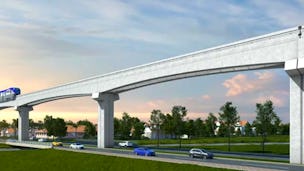
The second module delves into the elements of elevated viaducts, exploring topics such as Indian codes of practice governing metro viaducts, the various loads acting on these structures, and the application of modeling and analysis concepts using software. It further addresses the design intricacies of the superstructure, substructure, and foundations of metro viaducts. Additionally, the module introduces the learners to modeling software specific to metro rails, providing a comprehensive overview of tools essential for effective design and analysis in the field.
The third module on underground stations- Earth retaining structures encompasses the elements comprising an underground metro station, its configuration and different earth retaining systems used in underground metros.
The fourth module focusing on Underground Metro Stations analysis involves the exploration of Indian codes of practice governing the design of metro components and the evaluation of loads impacting underground stations.
The fifth module centered on the design of underground stations includes considerations of SOD restrictions and the sizing of elements for underground stations. It encompasses the modeling of underground stations using software and the design of station components in accordance with the relevant code of practice.
This module focuses on elevated metro stations, encompassing a detailed examination of station components, loads exerted on the station, modeling, and analysis concepts utilizing software. Learners will gain insights into the intricacies of designing station components, emphasizing practical applications and the utilization of software for effective modeling and analysis in the metro station design process.
What's included
14 videos1 assignment
Show info about module content
14 videos•Total 117 minutes
About the Specialization•3 minutes
About the Course•2 minutes
Components of Elevated station•6 minutes
Loads -I•11 minutes
Loads -2•8 minutes
Loads -3•8 minutes
Modelling and Analysis•13 minutes
Idealization of Framed Station- I•12 minutes
Idealization of Framed Station- II•11 minutes
Idealization of Cantielver Station•14 minutes
Design of Station Components- I•6 minutes
Design of Station Components-II•9 minutes
Analysis & design of Platform slab/track slab•8 minutes
Outline of link bridge / above ground structures•6 minutes
1 assignment•Total 30 minutes
Assessment on Elevated Viaduct - Design-I•30 minutes
Elevated Viaduct - Design- II
Module 2•1 hour to complete
Module details
This module delves into the elements of elevated viaducts, exploring topics such as Indian codes of practice governing metro viaducts, the various loads acting on these structures, and the application of modeling and analysis concepts using software. It further addresses the design intricacies of the superstructure, substructure, and foundations of metro viaducts. Additionally, the module introduces the learners to modeling software specific to metro rails, providing a comprehensive overview of tools essential for effective design and analysis in the field.
What's included
9 videos1 assignment
Show info about module content
9 videos•Total 54 minutes
Components of Elevated Metro Viaducts•7 minutes
Loads and introduction to IRC/IRS Codes•8 minutes
Analysis and Design of superstructure•8 minutes
Analysis of Foundation and substructure•8 minutes
Design of Substructure •2 minutes
Design of Open Foundation•5 minutes
Design of Pile Foundation •10 minutes
Introduction to Modelling Software - STAAD Pro •2 minutes
Introduction to Modelling Software - Midas Civil•2 minutes
1 assignment•Total 30 minutes
Assessment on Elevated Viaduct - Design- II•30 minutes
UG Station - Earth Retaining Systems
Module 3•2 hours to complete
Module details
This module on underground stations- Earth retaining structures encompasses the elements comprising an underground metro station, its configuration and different earth retaining systems used in underground metros. It also includes the design and analysis of diaphragm walls using specialized software.
What's included
14 videos1 assignment
Show info about module content
14 videos•Total 97 minutes
Underground Stations and its configurations•12 minutes
Types of Earth retaining structures-I•12 minutes
Types of Earth retaining structures-II•3 minutes
Types of Earth retaining structures-III•6 minutes
Diaphragm wall Analysis- Part 1 •8 minutes
Diaphragm wall Analysis- Part 2•10 minutes
Diaphragm wall Analysis- 3•13 minutes
Diaphragm wall Analysis-4•11 minutes
Diaphragm wall Analysis-5•5 minutes
Diaphragm wall Design•4 minutes
Secant pile wall design •6 minutes
Guide walls •2 minutes
Strut and waler design•4 minutes
Capping beams•1 minute
1 assignment•Total 30 minutes
Assessment On UG Station - Earth Retaining Systems•30 minutes
UG Station - Analysis
Module 4•2 hours to complete
Module details
The module focusing on Underground Metro Stations analysis involves the exploration of Indian codes of practice governing the design of metro components and the evaluation of loads impacting underground stations. It also includes outline of the software used in the analysis of underground metro station
What's included
10 videos1 assignment
Show info about module content
10 videos•Total 67 minutes
Codes of Practice, Dead loads, Live loads and SIDL for UG stations - Part 1•13 minutes
Codes of Practice, Dead loads, Live loads and SIDL for UG stations - Part 2•12 minutes
Earth and water loads •5 minutes
Surcharge and seismic loads•8 minutes
Construction loads •5 minutes
Load combinatiions •4 minutes
Fire resistant criteria •4 minutes
Soil Springs•7 minutes
2D model generation and Result interpretation•5 minutes
3D model and Result interpretation•4 minutes
1 assignment•Total 30 minutes
Assessment On UG Station - UG Station - Analysis•30 minutes
UG Station- Design
Module 5•2 hours to complete
Module details
The module centered on the design of underground stations includes considerations of SOD restrictions and the sizing of elements for underground stations. It encompasses the modeling of underground stations using software and the design of station components in accordance with the relevant code of practice.
What's included
8 videos1 assignment
Show info about module content
8 videos•Total 67 minutes
SOD restrictions & Element sizing for UG Stations•7 minutes
Floatation calculation •8 minutes
Structural Elements Clear cover & fire rating •6 minutes
Design of D-wall•10 minutes
Modelling of underground stations •7 minutes
Design of Slabs(Base slab, concourse slab and roof slab) -Part 1 •13 minutes
Design of Slabs(Base slab, concourse slab and roof slab) - Part 2 •10 minutes
Design of Beam and column •7 minutes
1 assignment•Total 30 minutes
Assessment On UG Station - UG Station- Design•30 minutes
Earn a career certificate
Add this credential to your LinkedIn profile, resume, or CV. Share it on social media and in your performance review.
Larsen & Toubro popularly known as L&T is an Indian Multinational conglomerate. L&T has over 8 decades of expertise in executing some of the most complex projects including the World's tallest statue - the Statue of Unity. L&T has a wide portfolio that includes engineering, construction, manufacturing, realty, ship building, defense, aerospace, IT & financial services. L&T EduTech is a e learning platform within the L&T Group, that offers courses that are curated & delivered by industry experts.
In the world of engineering and technology, change and advancements are happening at the speed of light. Academia needs to keep pace with this change and career professionals need to adapt. This is the need gap L&T EduTech will fill. The vision for L&T EduTech is to be the bridge between academia and industry, between career professionals and ever-changing technology. L&T EduTech firmly believes that, only when these need gaps are filled, will we have truly empowered and knowledgeable workforce that will lead India in the future.
OK
Explore more from Environmental Science and Sustainability
When will I have access to the lectures and assignments?
To access the course materials, assignments and to earn a Certificate, you will need to purchase the Certificate experience when you enroll in a course. You can try a Free Trial instead, or apply for Financial Aid. The course may offer 'Full Course, No Certificate' instead. This option lets you see all course materials, submit required assessments, and get a final grade. This also means that you will not be able to purchase a Certificate experience.
What will I get if I subscribe to this Specialization?
When you enroll in the course, you get access to all of the courses in the Specialization, and you earn a certificate when you complete the work. Your electronic Certificate will be added to your Accomplishments page - from there, you can print your Certificate or add it to your LinkedIn profile.
Is financial aid available?
Yes. In select learning programs, you can apply for financial aid or a scholarship if you can’t afford the enrollment fee. If fin aid or scholarship is available for your learning program selection, you’ll find a link to apply on the description page.