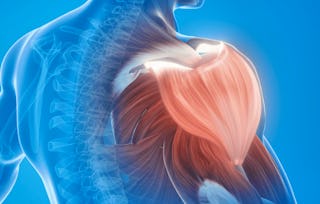
By the end of this course, you will (1) identify and differentiate hypermobility spectrum disorders and (2) develop safe treatment plans to manage associated pain and instability. Presented by Dr. Linda Bluestein, MD—an expert in connective tissue disorders—this course clarifies the clinical distinctions among generalized joint hypermobility, Ehlers-Danlos Syndromes, and related conditions.

Enjoy unlimited growth with a year of Coursera Plus for $199 (regularly $399). Save now.

Clinical Approaches to Assessing & Managing Hypermobility

This course is part of Empowering Women's Wellness: Holistic Movement and Mobility Specialization

Instructor: Niel Asher Education
Included with
Recommended experience
What you'll learn
How to assess and manage hypermobility safely and effectively
How to apply stabilization and proprioceptive methods to reduce symptoms
Skills you'll gain
Details to know

Add to your LinkedIn profile
December 2025
7 assignments
See how employees at top companies are mastering in-demand skills

Build your subject-matter expertise
- Learn new concepts from industry experts
- Gain a foundational understanding of a subject or tool
- Develop job-relevant skills with hands-on projects
- Earn a shareable career certificate

There are 7 modules in this course
This module introduces the foundations of hypermobility, including what it is, why it is commonly misunderstood, and how it affects multiple body systems beyond the joints. Dr. Bluestein explains that hypermobility exists on a spectrum ranging from flexible but asymptomatic individuals to those with complex connective tissue disorders such as hEDS and HSD. Students gain an understanding of how hypermobility impacts pain, instability, fatigue, and overall function, and why many individuals struggle for years before receiving an accurate diagnosis. The module also explores the lived experience of patients and highlights the importance of listening, validating symptoms, and recognizing patterns early to avoid mismanagement and unnecessary suffering.
What's included
10 videos2 readings1 assignment1 discussion prompt
This module focuses on the process of identifying and diagnosing hypermobility. Dr. Bluestein breaks down the clinical reasoning process, emphasizing that diagnosis is not based on a single test, but a combination of patient history, symptom patterns, and physical evaluation. Students learn how diagnostic tools such as the Beighton score are used, along with other supporting criteria, and why these measurements must be interpreted in the context of the whole person. The module highlights common diagnostic challenges, misconceptions in both medical and therapeutic settings, and the importance of early recognition to support better outcomes and prevent inappropriate treatments.
What's included
9 videos1 reading1 assignment
This module provides an overview of treatment planning and key considerations when working with individuals who have hypermobility. Rather than trying to “fix” flexibility, treatment focuses on improving stability, function, and quality of life. Students learn why aggressive stretching or strengthening without appropriate control can worsen symptoms, and how to build a structured plan that balances strengthening, nervous system regulation, and tissue care. The module introduces concepts such as pacing, graded progression, autonomic regulation, sleep quality, nutrition, and environmental modification, helping learners understand how multiple factors influence pain and stability. The goal is to create a treatment approach that is individualized, sustainable, and adaptable over time.
What's included
6 videos1 reading1 assignment
In this module, Dr. Bluestein demonstrates a structured client assessment using a live patient model. Students observe real-time evaluation techniques including Beighton scoring maneuvers, movement observations, proprioception challenges, and compensatory patterns. The focus is on assessing function rather than simply measuring flexibility and on identifying where instability or movement inefficiency may be contributing to pain or fatigue. This module reinforces how to interpret what you see, when to progress or regress movements, and how to guide clients toward increased awareness and control. It serves as practical integration of the information covered in the earlier modules.
What's included
3 videos1 reading1 assignment
This module explores the practical application of treatment strategies for hypermobility. Dr. Bluestein outlines how to build a treatment plan that emphasizes controlled strengthening, proprioceptive training, and symptom-guided progression. Rather than demonstrating hands-on techniques, the focus is on educating practitioners to combine multiple modalities—exercise, breath work, pain neuroscience education, lifestyle modification, and supportive manual therapy when appropriate—to create meaningful and lasting change. Students learn how to safely incorporate stretching without compromising joint stability and how to empower clients to actively participate in their own rehabilitation. The emphasis is on progress through consistency, pacing, and building tolerance over time.
What's included
3 videos1 reading1 assignment
The final module brings together the key concepts of the course and shows students how to integrate them into real-world clinical practice. Dr. Bluestein reviews the primary goals of managing hypermobility: improving function, reducing pain, promoting autonomy, and supporting long-term self-management. Students are encouraged to think holistically, recognizing that successful outcomes require a blend of physical, emotional, and lifestyle factors. The module reinforces that improvement is possible and sustainable when treatment is individualized, gradually progressed, and centered on empowering clients to understand their bodies and participate actively in their own recovery.
What's included
2 videos3 readings1 assignment1 discussion prompt
This final exam is designed to assess your understanding of the key concepts presented throughout the course. Please review all video lessons and written materials before beginning. A passing score of 70% or higher is required to successfully complete the course and earn your CE certificate. You may reference your notes during the exam. Once you pass, your certificate will be available for immediate download.
What's included
1 assignment
Earn a career certificate
Add this credential to your LinkedIn profile, resume, or CV. Share it on social media and in your performance review.
Instructor

Offered by
Explore more from Patient Care

Niel Asher Education

Niel Asher Education

Why people choose Coursera for their career


Open new doors with Coursera Plus
Unlimited access to 10,000+ world-class courses, hands-on projects, and job-ready certificate programs - all included in your subscription
Advance your career with an online degree
Earn a degree from world-class universities - 100% online


Join over 3,400 global companies that choose Coursera for Business
Upskill your employees to excel in the digital economy
Frequently asked questions
To access the course materials, assignments and to earn a Certificate, you will need to purchase the Certificate experience when you enroll in a course. You can try a Free Trial instead, or apply for Financial Aid. The course may offer 'Full Course, No Certificate' instead. This option lets you see all course materials, submit required assessments, and get a final grade. This also means that you will not be able to purchase a Certificate experience.
When you enroll in the course, you get access to all of the courses in the Specialization, and you earn a certificate when you complete the work. Your electronic Certificate will be added to your Accomplishments page - from there, you can print your Certificate or add it to your LinkedIn profile.
Yes. In select learning programs, you can apply for financial aid or a scholarship if you can’t afford the enrollment fee. If fin aid or scholarship is available for your learning program selection, you’ll find a link to apply on the description page.
More questions
Financial aid available,