When you enroll in this course, you'll also be enrolled in this Specialization.
Learn new concepts from industry experts
Gain a foundational understanding of a subject or tool
Develop job-relevant skills with hands-on projects
Earn a shareable career certificate
There are 4 modules in this course
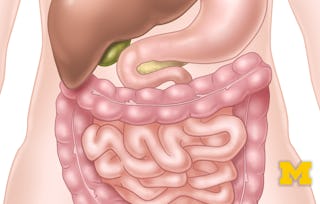
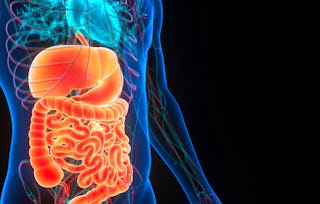
This course examines how the digestive system processes food, absorbs nutrients, and eliminates waste.
Learners will explore the roles of the stomach, intestines, liver, pancreas, and gallbladder, along with common digestive disorders such as GERD and IBS.
Ideal for students in healthcare, nutrition and those curious in the topic of gastrointestinal physiology this course uses engaging 3D animations, case studies, and clinical applications to connect theoretical concepts to real-world digestive health.
This lesson introduces learners to the upper gastrointestinal (GI) tract, emphasizing its critical role in the digestive process. Students will explore the structure and function of the oral cavity, esophagus, and their associated components. Through a detailed overview, learners will gain insight into the initial stages of digestion, including mechanical and chemical processes, and understand how food is prepared for further breakdown in the stomach.
What's included
4 videos4 assignments
Show info about module content
4 videos•Total 5 minutes
Introduction to the GI System•2 minutes
Features of the Oral Cavity •1 minute
Simulation: Mouth Mechanics: Structure and Function•1 minute
The Esophagus and Swallowing•1 minute
4 assignments•Total 45 minutes
Introduction to the GI System quiz•5 minutes
Features of the Oral Cavity quiz•5 minutes
The Esophagus and Swallowing quiz•5 minutes
Structure and Function of the GI System graded assessment•30 minutes
The Stomach and Abdominal Features
Module 2•1 hour to complete
Module details
This lesson focuses on the anatomy and functions of the stomach and its role in the digestive process, as well as the structural support provided by the peritoneum and mesenteries. Learners will explore the regions of the stomach, their specialized roles in digestion, and the interaction between mechanical and chemical processes that break down food. Additionally, the lesson covers the peritoneum and mesenteries, highlighting their importance in supporting and connecting abdominal organs within the digestive system.
What's included
4 videos4 assignments
Show info about module content
4 videos•Total 4 minutes
The Stomach's Structure and Regions•1 minute
The Stomach's Role in Digestion•1 minute
Integration with the Abdominal Cavity•1 minute
Simulation: Digestive Detective•1 minute
4 assignments•Total 45 minutes
The Stomach's Structure and Regions quiz•5 minutes
The Stomach's Role in Digestion quiz•5 minutes
Integration with the Abdominal Cavity quiz•5 minutes
The Stomach and Abdominal Features graded assessment•30 minutes
Sphincters and Intestines
Module 3•1 hour to complete
Module details
In this lesson, learners explored the role of sphincters and intestines in the gastrointestinal system. The importance of sphincters in regulating the movement of food and materials throughout the digestive tract was highlighted, emphasizing their role in preventing backflow and ensuring proper digestion. The structure and functions of the small intestine were detailed, with a focus on its sections, the duodenum, jejunum, and ileum, and their contributions to nutrient absorption. Finally, learners examined the large intestine, understanding its role in water absorption, waste formation, and the significant contribution of gut microbiota to overall digestive health.
What's included
4 videos4 assignments
Show info about module content
4 videos•Total 4 minutes
Major Gastrointestinal Sphincters•1 minute
The Small Intestine•1 minute
The Large Intestine•1 minute
Simulation: Sphincter Spotlight•1 minute
4 assignments•Total 45 minutes
Major Gastrointestinal Sphincters quiz•5 minutes
The Small Intestine quiz•5 minutes
The Large Intestine quiz•5 minutes
Sphincters and intestines graded assessment•30 minutes
Gastrointestinal Case Studies
Module 4•5 minutes to complete
Module details
This lesson explores the causes, symptoms, and management of common gastrointestinal (GI) disorders, including GERD, peptic ulcers, IBS, IBD, and colorectal cancer. By examining these conditions through real-world case studies, learners will gain an understanding of how disruptions in the GI system affect digestion, nutrient absorption, and overall health. The lesson emphasizes the importance of early diagnosis, lifestyle adjustments, and medical interventions in managing these disorders and maintaining GI health.
What's included
5 videos
Show info about module content
5 videos•Total 5 minutes
Emma - Gastroesophageal Reflux Disease (GERD)•1 minute
James - Peptic Ulcers•1 minute
Sarah - Irritable Bowel Syndrome (IBS)•1 minute
Daniel - Inflammatory Bowel Disease (IBD)•1 minute
Mr Patel - Colorectal Cancer•1 minute
Earn a career certificate
Add this credential to your LinkedIn profile, resume, or CV. Share it on social media and in your performance review.
Immersify Education is an innovative digital learning company focused on revolutionizing healthcare education. By blending expert knowledge with interactive technology, Immersify Education creates engaging, immersive content that helps learners master complex subjects with confidence. For more information, visit www.immersifyeducation.com
When will I have access to the lectures and assignments?
To access the course materials, assignments and to earn a Certificate, you will need to purchase the Certificate experience when you enroll in a course. You can try a Free Trial instead, or apply for Financial Aid. The course may offer 'Full Course, No Certificate' instead. This option lets you see all course materials, submit required assessments, and get a final grade. This also means that you will not be able to purchase a Certificate experience.
What will I get if I subscribe to this Specialization?
When you enroll in the course, you get access to all of the courses in the Specialization, and you earn a certificate when you complete the work. Your electronic Certificate will be added to your Accomplishments page - from there, you can print your Certificate or add it to your LinkedIn profile.
Is financial aid available?
Yes. In select learning programs, you can apply for financial aid or a scholarship if you can’t afford the enrollment fee. If fin aid or scholarship is available for your learning program selection, you’ll find a link to apply on the description page.