Results for "molecular biology"
 Status: NewStatus: Free Trial
Lecturio
Skills you'll gain: Molecular Biology, Biochemistry, Cell Biology, Pharmacology, Biology
 Status: Preview
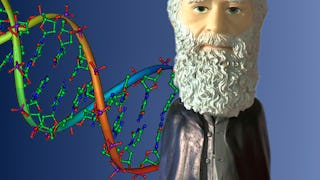
Duke University
Skills you'll gain: Molecular Biology, Biology, Biostatistics, Biotechnology, Environmental Science, Scientific Methods, Mathematical Modeling
 Status: Free Trial
Johns Hopkins University
Skills you'll gain: Oncology, Medical Imaging, Patient Education And Counseling, Diagnostic Radiology, Radiation Therapy, Molecular Biology, Diagnostic Tests, Clinical Trials, Pain Management, Preventative Care, Treatment Planning, Urology, Patient Treatment, Immunology, Epidemiology, Surgery, Cell Biology, Care Management, Biology, Pathology
 Status: Preview
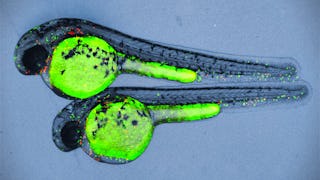
University of Geneva
Skills you'll gain: Biochemistry, Biochemical Assays, Fluoroscopy, Molecular Biology, Cell Biology, Chemistry, Biotechnology, Laboratory Research, Scientific Visualization, Biology, Specimen Labeling
 Status: Preview
McMaster University
Skills you'll gain: Precision Medicine, Molecular Biology, Bioinformatics, Pharmacology, Medical Science and Research, Biotechnology, Biochemistry, Laboratory Techniques, Healthcare Ethics, Science and Research
 Status: Preview
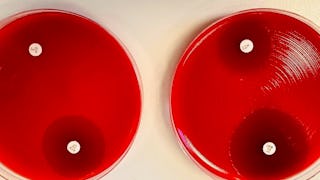
Technical University of Denmark (DTU)
Skills you'll gain: Laboratory Testing, Quality Assurance, Microbiology, Infectious Diseases, Bioinformatics, Medical Laboratory, Molecular, Cellular, and Microbiology, Epidemiology, Public Health and Disease Prevention, Data Quality, Medical Science and Research, Biology, Public Health
What brings you to Coursera today?
 Status: NewStatus: Preview
Birla Institute of Technology & Science, Pilani
Skills you'll gain: Bioinformatics, Biotechnology, Data Management, Biostatistics, Data Mining, Applied Machine Learning, Unsupervised Learning, Scientific Visualization, Data Preprocessing, Correlation Analysis, Chemical and Biomedical Engineering, Dimensionality Reduction, Computational Thinking, Markov Model, Algorithms
 Status: Preview
Stanford University
Skills you'll gain: Molecular Biology, Biotechnology, Biochemistry, Chemical and Biomedical Engineering, Biology, Scientific Visualization, Structural Analysis
 Status: Preview
Korea Advanced Institute of Science and Technology(KAIST)
Skills you'll gain: Cell Biology, Physiology, Immunology, Biochemistry, Pathology, Endocrinology, Pharmacology, Molecular Biology, Chronic Diseases, Oncology
 Status: Preview
University of California San Diego
Skills you'll gain: Bioinformatics, Programming Principles, Python Programming, Computational Thinking, Biology, Data Structures
 Status: Free Trial
Johns Hopkins University
Skills you'll gain: Bioinformatics, Data Science, Molecular Biology, Data Analysis, Computer Science, Statistical Analysis, Computational Thinking, Biostatistics, Statistics, Software Engineering, Algorithms, Biology
 Status: Preview
University of Manchester
Skills you'll gain: Biotechnology, Sustainable Technologies, Process Engineering, Molecular Biology, Chemical Engineering, Sustainable Engineering, Life Sciences, Biochemistry, Pharmaceuticals, Biomedical Engineering, Materials science, Scalability
Searches related to molecular biology
In summary, here are 10 of our most popular molecular biology courses
- Molecular and Cell Biology: Lecturio
- Introduction to Genetics and Evolution: Duke University
- Cancer Biology: Johns Hopkins University
- Chemical Biology: University of Geneva
- DNA Decoded: McMaster University
- Antimicrobial resistance - theory and methods: Technical University of Denmark (DTU)
- Introduction to Bioinformatics: Birla Institute of Technology & Science, Pilani
- RNA Biology with Eterna: Stanford University
- Basic Principles of Cell Signaling: Korea Advanced Institute of Science and Technology(KAIST)
- Biology Meets Programming: Bioinformatics for Beginners: University of California San Diego










