Results for "genome sequencing"
 Status: Free Trial
Johns Hopkins University
Skills you'll gain: Bioinformatics, Unix Commands, Biostatistics, Exploratory Data Analysis, Statistical Analysis, Unix, Data Science, Data Management, Statistical Methods, Command-Line Interface, Statistical Hypothesis Testing, Linux Commands, Data Analysis Software, Data Quality, Data Structures, Data Analysis, Computer Science, Molecular Biology, R Programming, Python Programming
 Status: Free Trial
University of California San Diego
Skills you'll gain: Bioinformatics, Molecular Biology, Microbiology, Infectious Diseases, Biotechnology, Computational Thinking, Algorithms, Python Programming
 Status: Preview
Technical University of Denmark (DTU)
Skills you'll gain: Bioinformatics, Molecular Biology, Microbiology, Infectious Diseases, Medical Science and Research, Database Development, Taxonomy, Data Pipelines
 Status: Free Trial
Johns Hopkins University
Skills you'll gain: Bioinformatics, Molecular Biology, Computational Thinking, Data Structures, Python Programming, Data Analysis, Algorithms, Life Sciences
 Status: Free Trial
LearnQuest
Skills you'll gain: Data Preprocessing, Feature Engineering, Model Evaluation, Bioinformatics, Exploratory Data Analysis, Random Forest Algorithm, Pandas (Python Package), Scikit Learn (Machine Learning Library), Applied Machine Learning, Data Manipulation, Dimensionality Reduction, Data Cleansing, Keras (Neural Network Library), Data Transformation, NumPy, Classification Algorithms, Tensorflow, Artificial Neural Networks, Machine Learning, Data Science
 Status: Preview
University of Illinois Urbana-Champaign
Skills you'll gain: Life Sciences, Molecular Biology, Biotechnology, Precision Medicine, Biology, Physiology, Sustainable Development, Environmental Science, Cell Biology, Microbiology, Biomedical Engineering, Research
What brings you to Coursera today?
 Status: Preview
The University of Melbourne
Skills you'll gain: Molecular Biology, Life Sciences, Oncology, Environment, Cell Biology, Biology, Medical Science and Research, Research Design, Nutrition and Diet
 Status: Preview
Duke University
Skills you'll gain: Molecular Biology, Biology, Biostatistics, Biotechnology, Environmental Science, Scientific Methods, Mathematical Modeling
 Status: Preview
Johns Hopkins University
Skills you'll gain: Bioinformatics, Molecular Biology, Data Visualization Software, Statistical Analysis, Command-Line Interface, Linux
 Status: NewStatus: Free Trial
Lecturio
Skills you'll gain: Molecular Biology, Biochemistry, Cell Biology, Pharmacology, Biology
 Status: Free Trial
University of California San Diego
Skills you'll gain: Bioinformatics, Markov Model, Molecular Biology, Data Mapping, Machine Learning Methods, Computational Thinking, Algorithms, Data Structures, Computer Programming

 Status: NewStatus: Free Trial
Skills you'll gain: Epic EMR, Health Informatics, Data Mapping, Clinical Informatics, Clinical Data Management, Data Dictionary, Electronic Data Capture (EDC), Health Information Management, Data Analysis, Patient-centered Care, Electronic Medical Record, Extract, Transform, Load, Data Transformation, Data Integrity, Data Quality, Data Validation, Data Collection, Data Access
What brings you to Coursera today?
In summary, here are 10 of our most popular genome sequencing courses
- Genomic Data Science: Johns Hopkins University
- Genome Sequencing (Bioinformatics II): University of California San Diego
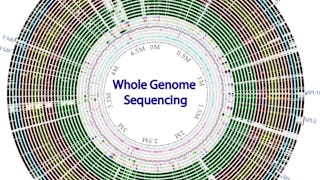
- Whole genome sequencing of bacterial genomes - tools and applications: Technical University of Denmark (DTU)
- Algorithms for DNA Sequencing: Johns Hopkins University
- AI for Scientific Research: LearnQuest
- Genomics: Decoding the Universal Language of Life: University of Illinois Urbana-Champaign
- Epigenetic Control of Gene Expression: The University of Melbourne
- Introduction to Genetics and Evolution: Duke University
- Bioinformatics Methods for Transcriptomics: Johns Hopkins University
- Molecular and Cell Biology: Lecturio










