Results for "animal behavior"

The University of Edinburgh
Skills you'll gain: Behavioral Health, Pain Management, Applied Behavior Analysis, Scientific Methods, Behavior Management, Stress Management, Empathy & Emotional Intelligence, Ethical Standards And Conduct, Qualitative Research, Science and Research, Physiology
 Status: Preview
Duke University
Skills you'll gain: Psychology, Human Learning, Learning Theory, Education and Training, Training Programs, Anthropology, Experimentation, Research, Science and Research, Scientific Methods, Non-Verbal Communication, Biology

The University of Edinburgh
Skills you'll gain: Culture, Sensory Systems Analysis, Positive Behavior Support, Behavior Management, Scientific Methods, Non-Verbal Communication, Ethical Standards And Conduct, Science and Research, Research, Biology
 Status: Free Trial
University of Colorado Boulder
Skills you'll gain: Culture, Social Studies, Social Sciences, Sociology, Anthropology, Social Justice, Healthcare Ethics, Environment, Laboratory Research, Mental Health, General Science and Research, Media and Communications, Health Care, Cultural Diversity, Mental and Behavioral Health, Food and Beverage, Social Impact, Rehabilitation, Ethical Standards And Conduct, Advocacy
 Status: Preview
The University of Edinburgh
Skills you'll gain: Anesthesiology, Post-Anesthesia Care Unit, Pre-Anesthetic Assessment, Pain Management, Patient Preparation, Patient Education and Support, Stress Management, Preventative Care, Perioperative Care, Dignity in Care, Operating Room (OR), Clinical Practices, Behavioral Management, Patient Evaluation, Behavioral Health, Patient Observation, Behavior Management, Positive Behavior Support, Long Term Care, Sensory Systems Analysis
 Status: Free Trial
Skills you'll gain: Applied Behavior Analysis, Behavioral Management
What brings you to Coursera today?
 Status: NewStatus: Free Trial
University of Minnesota
Skills you'll gain: Pharmacology, Pharmacotherapy, Clinical Pharmacy, Molecular Biology, Substance Abuse, Mental and Behavioral Health, Neurology, Physiology, Psychology, Biochemistry, Biology, Developmental Disabilities, Science and Research
 Status: Free Trial
Skills you'll gain: Positive Behavior Support, Speech Therapy, Behavior Management, Autism Spectrum Disorders, Education and Training, Communication Strategies, Social Skills, Interpersonal Communications, Mental and Behavioral Health, Teaching, Communication, Learning Theory, Child Development, Classroom Management, Training Programs, Instructional Strategies, Developmental Disabilities, Proactivity, Data Collection, Learning Strategies
 Status: NewStatus: Free Trial
Skills you'll gain: Service Recovery, Marketing Psychology, Customer experience improvement, Customer experience strategy (CX), Customer Service, Integrated Marketing Communications, Customer Insights, Data-Driven Marketing, Service Design, Consumer Behaviour, Media and Communications, Customer Analysis, Brand Strategy, Customer Relationship Building, Brand Management, Marketing Communications, Communication Strategies, Strategic Communication, Marketing, Social Media Analytics
 Status: Free Trial
Vanderbilt University
Skills you'll gain: Prompt Engineering, ChatGPT, Generative AI Agents, AI Orchestration, Prompt Patterns, Agentic Workflows, OpenAI API, LLM Application, AI Workflows, AI literacy, AI Enablement, AI powered creativity, Agentic systems, Generative AI, Artificial Intelligence, Large Language Modeling, AI Security, Tool Calling, OpenAI, Application Development
 Status: Free TrialStatus: AI skills
Skills you'll gain: User Story, Systems Development Life Cycle, Cloud Deployment, CI/CD, Software Development Life Cycle, Open Web Application Security Project (OWASP), Continuous Integration, Istio, Linux Commands, Software Architecture, Test Driven Development (TDD), Cloud Computing Architecture, Devops Tools, Restful API, Git (Version Control System), DevOps, Grafana, Software Engineering, Python Programming, Application Development
 Status: Free Trial
University of Illinois Urbana-Champaign
Skills you'll gain: Data-Driven Marketing, Digital Brand Strategy, Digital Marketing Campaigns, Customer Engagement, Journey Mapping, Digital Marketing Tools, Direct Marketing, Driving engagement, Marketing Strategy and Techniques, Online Advertising, Digital Advertising, MarTech, Data Architecture, Strategic Marketing, Social Media Marketing, Consumer Behaviour, Customer Insights, Emerging Technologies, Experimentation, Data Visualization
In summary, here are 10 of our most popular animal behavior courses
- Animal Behaviour and Welfare: The University of Edinburgh
- Dog Emotion and Cognition: Duke University
- The Truth About Cats and Dogs: The University of Edinburgh
- Animals and Society: University of Colorado Boulder
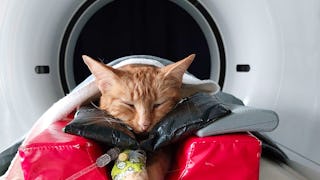
- Animal Welfare in the Clinic: The University of Edinburgh
- Applied Behavior Analysis (ABA) Introduction: MedCerts
- Genetic Underpinnings of Synaptic Disease: University of Minnesota
- Behavior Technician ABA Fundamentals: MedCerts
- Consumer Behavior & Service Marketing: EDUCBA
- AI Agents and Agentic AI in Python: Powered by Generative AI: Vanderbilt University










