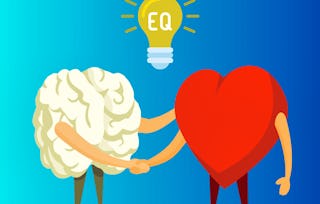
The course provides a structured and practical introduction to Emotional Intelligence (EI) - an essential skill for thriving in any professional environment. Designed for both beginners and working professionals, this course helps you recognize, understand, and manage emotions to improve communication, collaboration, and leadership impact. You’ll explore the five pillars of EI - self-awareness, self-regulation, motivation, empathy, and social skills, and learn how to apply them for better decision-making and stronger professional relationships.


Recommended experience
What you'll learn
Apply Emotional Intelligence frameworks to strengthen decision-making, collaboration, and communication in workplace settings.
Build self-awareness and emotional control to manage triggers, stay calm under pressure, and enhance professional relationships.
Practice empathy, active listening, and social awareness to foster team harmony, trust, and productive collaboration.
Create a personalized Emotional Intelligence action plan for leadership growth, performance improvement, and long-term success.
Skills you'll gain
Details to know

Add to your LinkedIn profile
December 2025
16 assignments
See how employees at top companies are mastering in-demand skills

There are 4 modules in this course
This introductory module lays the groundwork for understanding what emotional intelligence (EI) is and why it matters in professional life. Learners will explore the five core components of EI—self-awareness, self-regulation, motivation, empathy, and social skills—through real-world examples and workplace scenarios. By comparing leading EI models such as Goleman’s, Bar-On’s, and MSCEIT, participants will gain clarity on how emotional intelligence influences communication, collaboration, and decision-making at work. Interactive tools like the “EQ Self-Check” and scenario-based activities help learners assess their current EI strengths and identify growth areas. Through engaging videos, readings, and reflective exercises, this module equips learners with the essential knowledge to recognize and apply emotional intelligence in action—laying a strong foundation for personal development and future leadership growth.
What's included
9 videos5 readings4 assignments1 discussion prompt
This module focuses on developing the core emotional intelligence skills of self-awareness and self-regulation—essential for managing emotions effectively in any professional setting. Learners will explore how understanding their emotional triggers and reactions directly impacts decision-making, communication, and workplace relationships. Through guided reflections, interactive tools, and practical exercises, participants will learn to recognize emotional patterns, pause before reacting, and apply mindful strategies such as breathwork and reframing to maintain composure under pressure. Realistic workplace simulations and self-assessment activities like the “Decision Reflection Tool” and “Stress Scenario Simulator” help learners strengthen emotional balance and resilience. By the end of the module, participants will be able to apply practical techniques for identifying, managing, and redirecting emotions to enhance focus, adaptability, and overall performance at work.
What's included
8 videos3 readings4 assignments
This module emphasizes the interpersonal dimensions of emotional intelligence—empathy and social skills—that are vital for building trust, collaboration, and effective communication at work. Learners will discover how to understand and respond to others’ emotions with authenticity, distinguishing empathy from sympathy and exploring its role across diverse workplace contexts. Through engaging videos, listening simulations, and scenario-based exercises, participants will practice active listening, perspective-taking, and emotionally intelligent communication. Interactive tools such as the “Empathy Meter” and “Team Dynamics Map” help learners strengthen connection, inclusion, and collaboration within teams. By integrating empathy into daily interactions, learners will develop stronger relationships, manage differences constructively, and contribute to a more positive and psychologically safe workplace culture.
What's included
8 videos3 readings4 assignments
This final module explores how emotional intelligence (EI) enhances leadership effectiveness and supports long-term career growth. Learners will examine how emotionally intelligent leaders inspire trust, motivate teams, and shape positive organizational cultures. Through practical examples, interactive tools, and reflective exercises, participants will identify key EI-based leadership competencies such as self-regulation, empathy-driven communication, and motivation through influence. They will also explore how EI fosters employee engagement, reduces turnover, and drives high performance. Activities like the “Leadership Styles Quiz” and “Career Map Builder” guide learners in creating a personalized EI leadership and development plan. By the end of this module, participants will be equipped to lead with emotional awareness, authenticity, and strategic empathy—transforming EI insights into sustainable leadership success.
What's included
9 videos4 readings4 assignments
Instructor

Offered by
Explore more from Personal Development
Status: Free TrialLearnKartS
Status: Free Trial
Status: Free TrialUniversity of California, Davis
Why people choose Coursera for their career


Open new doors with Coursera Plus
Unlimited access to 10,000+ world-class courses, hands-on projects, and job-ready certificate programs - all included in your subscription
Advance your career with an online degree
Earn a degree from world-class universities - 100% online


Join over 3,400 global companies that choose Coursera for Business
Upskill your employees to excel in the digital economy
Frequently asked questions
Emotional Intelligence (EI) is the ability to recognize, understand, and manage emotions of your own and others to improve communication, teamwork, and leadership outcomes.
This course is ideal for students, professionals, and managers who want to enhance communication, collaboration, and leadership through emotional intelligence.
No prior experience is required. The course starts with the basics of Emotional Intelligence and gradually moves to real workplace applications.
More questions
Financial aid available,